Key Takeaways:
- Evilginx targets the session that exists after login, not the login itself, which is why most security controls don’t catch it
- SMS codes, email links, and TOTP apps do not protect against AiTM attacks; only FIDO2 security keys and passkeys do
- Layered defenses including phishing-resistant MFA, DNS filtering, and account monitoring are required to reduce exposure
Evilginx – sometimes searched as evilnginx, evilgnix, or evil ginx – is a man-in-the-middle (MitM) phishing framework that has redefined what credential theft looks like. Originally released as an open-source tool, it has evolved significantly through versions 2.x and the current Evilginx 3.x release, making it one of the most capable and widely studied adversary-in-the-middle phishing platforms available today.
Unlike traditional phishing kits, Evilginx proxies real authentication sessions in real time, capturing session cookies that render even two-factor authentication useless. This guide breaks down exactly how Evilginx works, why its impact is so severe, and critically, which defenses actually stop it.
How Evilginx operates in a man-in-the-middle attack
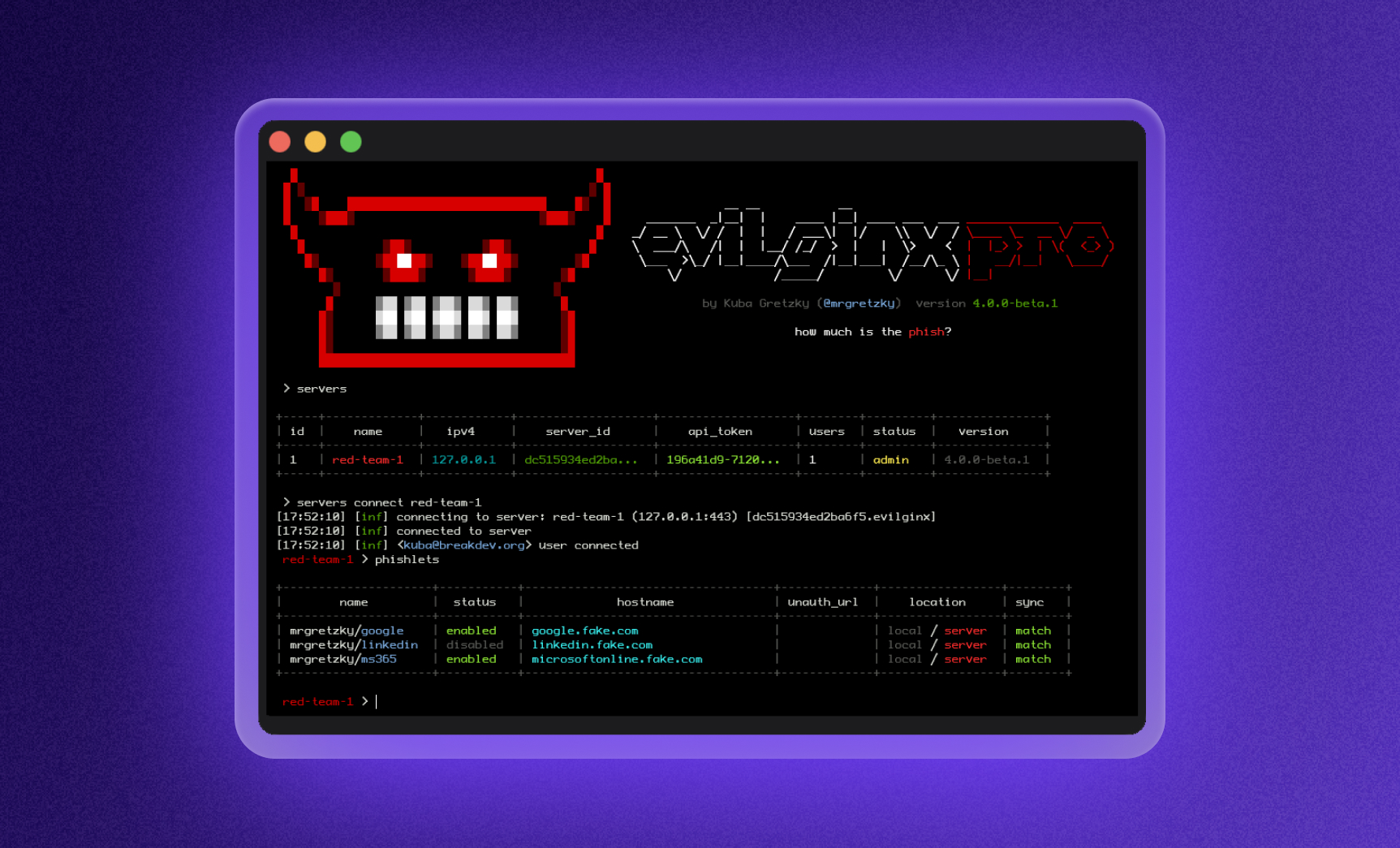
Evilginx works by standing up a reverse proxy between the victim and a legitimate service, using configurable templates called phishlets to mirror real login pages with surgical accuracy. As the victim authenticates, Evilginx captures both the plaintext credentials and the post-authentication session cookies in real time.
Here’s a detailed breakdown of how this type of attack functions end to end:
1. Phishing Attack Execution
Target Engagement: The attacker needs to lure the victim to the phishing site. This can be done through various methods, including phishing emails, social engineering, or malicious links shared via social media.
Learn more about social engineering and phishing
User Interaction: When the victim navigates to the phishing site and attempts to log in, Evilginx acts as a reverse proxy between the victim and the legitimate service, relaying authentication traffic in real time while capturing credentials and session data. The victim enters their username and password on the phishing page, which Evilginx forwards to the legitimate service.
2. Data capture and interception
3. Session hijacking
Credential Harvesting: As the victim submits their credentials, Evilginx captures and logs the username and password.
Session Hijacking Data Capture: More critically, Evilginx captures authenticated session cookies and related tokens issued by the legitimate service after successful authentication.
3. Session Hijacking
Access Gained: Using the captured session tokens and cookies, the attacker can access the victim’s account without needing the second factor of authentication. This allows them to perform any actions that the victim could, effectively taking over their account.
The impact of Evilginx
Evilginx is particularly effective against authentication systems that rely on SMS codes, TOTP authenticator apps, or push-based MFA prompts because it can capture authenticated session data after login. However, phishing-resistant MFA technologies such as FIDO2 security keys and passkeys significantly reduce the effectiveness of adversary-in-the-middle phishing frameworks.
Here’s why it’s so impactful:
Bypassing Two-Factor Authentication: Many organizations and individuals use 2FA to enhance security. However, Evilginx can capture the authentication tokens used by 2FA systems, allowing attackers to bypass this layer of security. This is particularly concerning for high-value targets like financial institutions or email accounts with sensitive information.
Real-Time Data Capture: Evilginx operates in real-time, capturing credentials and tokens as they are transmitted. This dynamic approach makes it harder for users to detect that their information is being intercepted, as the phishing site can closely mimic the legitimate service’s appearance.
Advanced Evasion Techniques: Because Evilginx operates as a live reverse proxy, the phishing infrastructure can closely mimic legitimate authentication flows while dynamically relaying traffic between the victim and the real service. This can make traditional phishing detection techniques less effective, particularly when users rely only on visual trust indicators such as branding or HTTPS padlocks.
Why standard MFA fails against MITM attacks (and what works)
Most MFA implementations like SMS one-time codes, email links, and even TOTP authenticator apps like Google Authenticator don’t protect against Evilginx.
Because Evilginx proxies the entire authentication session in real time, it forwards the victim’s MFA code to the legitimate service and captures the resulting session cookie before the user even realizes anything is wrong. The MFA check passes; the attacker wins the session anyway.
The only MFA methods that are architecturally immune to this attack are phishing-resistant credentials: FIDO2 hardware security keys (such as YubiKey or Google Titan) and passkeys.
Both standards cryptographically bind the authentication to the legitimate origin domain, so even a perfect-looking proxy site cannot satisfy the challenge. If your organization is evaluating MFA upgrades, FIDO2 and passkeys are the only options that defeat Evilginx-style AiTM attacks by design.
How to Protect Yourself from Evilginx and MitM Phishing
While Evilginx and similar malware or proxy tools pose a significant MITM threat, there are several measures you can take to prevent these attacks:
| Defense | What It Does |
| Phishing-resistant MFA | Blocks session hijacking at the authentication layer |
| URL verification | Catches spoofed domains before credentials are entered |
| DNS filtering & email gateways | Blocks known Evilginx infrastructure upstream |
| Account activity monitoring | Detects unauthorized access after a breach |
| Browser isolation / conditional access | Reduces attack surfaces at the network level |
| Software updates | Patches vulnerabilities that could be exploited alongside phishing |
Be Cautious of Phishing Links: Always verify the URL before entering credentials. Don’t rely on HTTPS or padlock icons alone.
Use Strong, Unique Passwords: Employ a password manager to generate and store strong passwords. This reduces credential reuse risks, making it harder for hackers to exploit compromised accounts.
See what proactive threat protection looks like. Schedule a demo of Bolster AI’s platform.
Use Phishing-Resistant MFA Only: Upgrade to FIDO2 keys or passkeys. TOTP apps and SMS codes are bypassed by Evilginx, so only phishing-resistant MFA stops MITM attacks at the authentication layer.
Deploy Anti-Phishing DNS and Email Filtering: Network-layer controls such as DNS filtering, secure email gateways, and endpoint tools block known Evilginx infrastructure. Note that VPNs do not protect against Evilginx-style phishing. They mask your IP address but can’t intercept or inspect the proxied session that Evilginx creates.
Monitor Account Activity: Regularly review account activity for unusual actions. Enable alerts for logins from unfamiliar locations to quickly respond to MITM threats.
Keep Software Up-to-Date: Ensure operating systems, browsers, and security software are updated to patch vulnerabilities exploited alongside malware or phishing tools.
Employ Network Security Measures: Organizations can strengthen defenses through browser isolation, identity-aware proxies, and conditional access controls.
Using this knowledge to stop MITM attacks
Evilginx is a reminder that security posture is not static. As attackers move from stealing passwords to hijacking authenticated sessions, defenses have to move with them. Start with phishing-resistant MFA, layer in monitoring and DNS filtering, and treat every unexpected authentication prompt as suspicious until proven otherwise.
To learn more about how Bolster AI can help your business defend against adversary-in-the-middle phishing attacks, request a demo with our team today.