A few years ago, most discussions around deepfakes felt theoretical. The technology was impressive, but for many security teams, it still seemed distant from day-to-day operations.
That is no longer the case.
Today, AI-generated media is showing up inside real phishing campaigns, executive impersonation scams, fraudulent social accounts, fake investment promotions, and coordinated social engineering attacks. Security teams are increasingly being asked to investigate suspicious videos, manipulated images, and synthetic media tied to broader impersonation activity.
The challenge is that most organizations still do not have a clear operational process for handling these investigations when they happen in real time. When suspicious media surfaces during an active investigation, teams are often left trying to answer basic but important questions:
- Is this content real or manipulated?
- Is this an isolated incident or part of a broader campaign?
- What infrastructure is connected to it?
- Does this require escalation or takedown action?
In many cases, analysts are piecing those answers together manually across disconnected systems and workflows while the campaign continues operating. That gap between media verification and operational response is becoming increasingly important.
At Bolster AI, we do not see deepfake detection as a standalone problem. We see it as part of a larger impersonation investigation challenge. Deepfakes rarely exist in isolation. A fake executive video is often tied to spoofed domains, impersonation websites, fraudulent social profiles, phishing pages, fake investment schemes, or other coordinated infrastructure designed to make the attack appear legitimate.
Simply identifying manipulated media is useful, but it is rarely enough on its own to stop the broader operation. Security teams also need visibility into the infrastructure distributing the content and the ability to respond quickly.
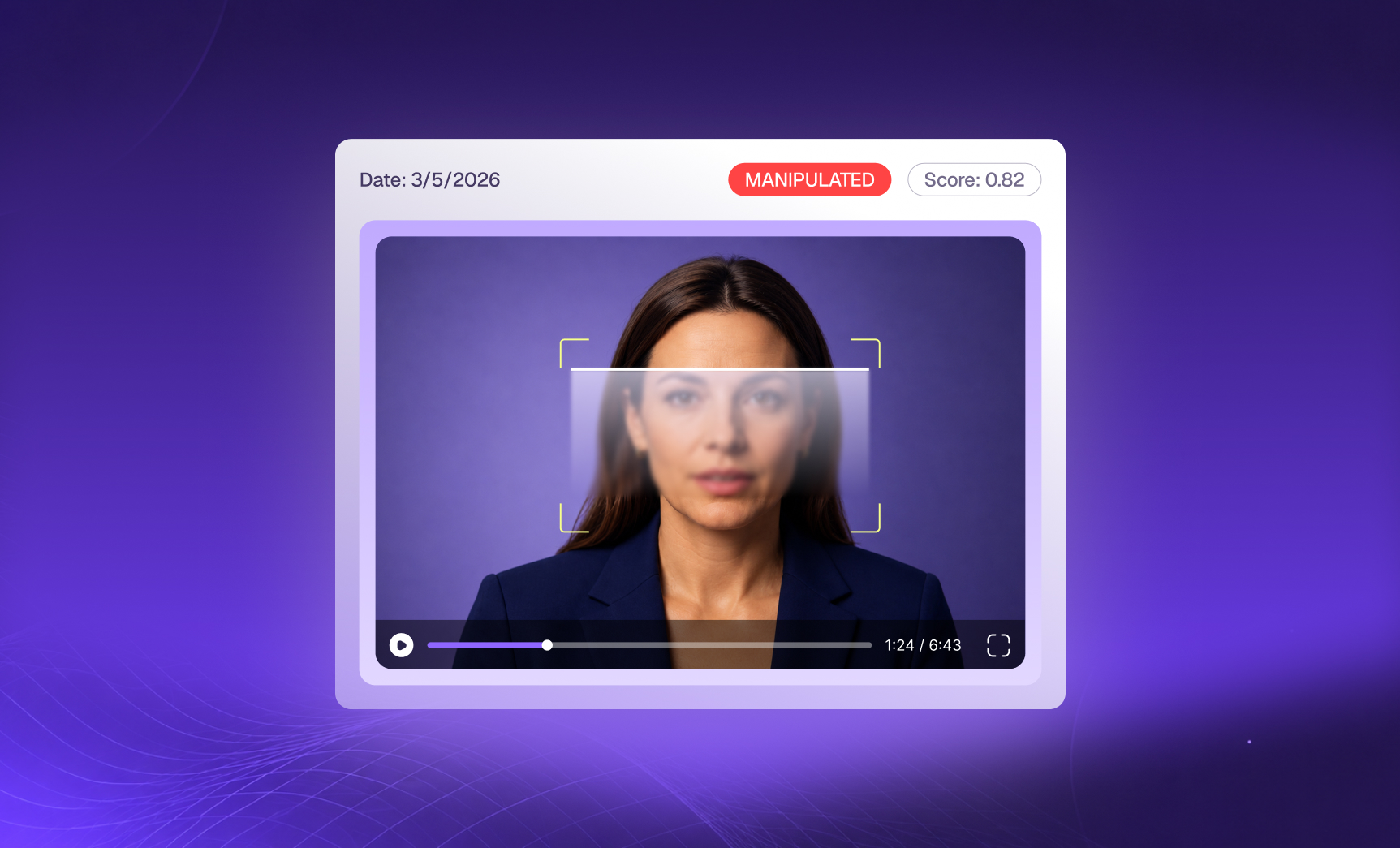
That is why we are launching Deepfake Detection inside the Bolster AI platform, powered by Reality Defender. Through the integration, analysts can investigate suspicious images and videos directly within the same environment they already use to identify and disrupt external impersonation campaigns. Instead of relying on disconnected tools or separate escalation paths, teams can validate suspicious media as part of the broader investigation workflow. For us, the value is not just detection. The value is operational context.
Security teams need to understand how manipulated media is being used, where it is spreading, and what infrastructure is supporting it. They need to connect suspicious content to phishing domains, fake accounts, impersonation websites, fraudulent ads, and coordinated campaign activity across the external attack surface. That broader context helps teams make faster decisions around escalation, enforcement, and takedown actions.
Reality Defender brings strong multimodal media verification capabilities across voice, video, and images. Bolster AI brings external threat intelligence, impersonation discovery, investigation workflows, and takedown operations across digital channels. Together, the integration helps organizations move beyond media verification alone and toward faster operational response.
AI-generated impersonation attacks are evolving quickly, and security workflows need to evolve with them. Detection is important, but it is only one step in the investigation.
See How Bolster AI Investigates and Disrupts AI-Powered Impersonation Campaigns
Deepfake Detection is now available inside the Bolster AI platform, helping security teams validate suspicious media as part of broader impersonation investigations and enforcement workflows.
Request a demo to see how Bolster AI helps organizations investigate suspicious media, uncover related attack infrastructure, and accelerate takedown operations across the external attack surface.